Showing posts with label pro em-1. Show all posts

Tuesday, February 16, 2016

What makes Pro EM-1 different than other Probiotics On The Market

Pro EM•1® Probiotic is unique, not only in its formulation, but also in how it can be consumed and how it works. Most other probiotics on the market consist of freeze dried microbes that are selected because they are “found in the human gut”, put into a capsule, and bottled. Let’s look at why there are issues with some of these ideas.


1. High colony counts are important for freeze dried because 85-90% of the freeze dried microbes do NOT survive the freeze drying process. This is why so many companies stress how many cultures they have in their product.  Pro EM•1® is not freeze dried and contains all live, active, naturally occurring microbes that are not genetically modified.


2. Time.  According to the Mayo Clinic (http://www.mayoclinic.org/digestive-system/expert-answers/faq-20058340) the average time from ingestion to elimination can vary from 33 hours to 53 hours. The first 6-8 hours are from mouth to small intestines. The rest of the time is between small intestines to excretion. Freeze dried microbes need to re-hydrate before then can become active again. Most need 10-14 hours of hydration time before the microbes are able to start working. Once they do, they then need to start multiplying by eating foods and then take several more hours to days to establish themselves. During this time they are confronted with a harsh environment, having to compete with beneficial and pathogenic bacteria in the gut and their respective metabolites. If this is correct, the time from ingestion until the microbes can establish themselves is about as long as it takes the average person to completely digest and eliminate food. Many companies also put a coating on their capsules to “protect” their microbes from being exposed to stomach acids. Following that line of thinking, this means the first 6-8 hours of exposure time have not even started hydration and reanimation. Then we add 10-14 hours and we are up to 16 to 22 hours. That means 16 to 22 hours of exposure time are lost all due to way the probiotic is made in the first place. Pro EM•1® is a live liquid that start to be absorbed by your body as soon as you put it in your mouth.


3. The Stomach Acid Myth. It is believed that probiotics are weak and not able to survive the low pH of stomach acids. For microbes that are never exposed to low acids, this is mostly true. EM Research Organization ran a few studies a couple of years ago to see how their microbes stood up to low pH solutions. They compared three major company’s products to theirs and discovered there was nearly 100% survival of the microbes in Pro EM•1®. The microbes in Pro EM•1® will easily survive passage through the stomach acid.


4. Diversity is key to health and survival. Most products lack diversity of microbes. Take a look at the major probiotics on the market and look at the list of microbes in the products. The first word is the genus. The second word is the species. Most probiotics use a few different species of lactic acid bacteria. These include Lactobacillus, bifido, and bacillus bacteria. The species are different, yet being in the same genus, they all generally produce the same metabolites, with slight variation between species. This means, although they may have 4 or more species, they are all doing pretty much the same thing. What is needed is a diversity of genus so there will be different metabolites produced that will support the digestive system and the establishment of the beneficial microbes (the probiotics).

Pro EM•1® Probiotic contains microbes from three genus: Lactobacillus, Saccharomyces, and Rhodopseudomonus.
 
5. Lack of Metabolites. If the entire product ingredients were not fermented together, they lack metabolites. Freeze dried products are isolated species of microbes that are usually grown on agar. The microbes are scraped off the culturing plates, the sprayed on some filler like maltodextrin or dextrose (both are corn sugars...usually from genetically modified GMO corn). There are no metabolites (vitamins, antibacterial compounds, minerals, enzymes, co-enzymes, peptides, bioflavinoids, amino acids, organic acids, etc.). This means, when the micorbes enter a hostile environment, such as a compromised digestive system that is teaming with various microbes, acids, and gases, the microbe survival rate declines dramatically.  Pro EM•1® Probiotic is fermented at 100ºF and contains all the natural metabolites produced by the microbes during fermentation.

So, how does your probiotic compare to Pro EM•1®?

Tuesday, February 2, 2016

How do Probiotics and Prebiotics work together?

Prebiotics and Probiotics working together
The concept is pretty simple as to how prebiotics and probiotics work together. Basically, a prebiotic feeds a probiotic. The prebiotic is food and the probiotic is the living organism that eats it.

In our previous posts we went into some detail about how prebiotics work. The image on the right show that not only do prebiotics feed probiotics, they also have a direct affect on the immune system... stimulating it. The prebiotics help the probiotics establish themselves faster so they can help their host (us, or animals) sooner than if they had to do it all on their own. 

Imagine you bought a rundown home and moved into it right away before fixing it, or perparing it. You moved in and then had to start setting in, but nothing was quite right. You would be pretty stressed.  Now, imagine that you had a crew come in and clean it all up, repaint it, even move all your stuff in..right where you wanted it. You would be able to get right into the swing of things without skipping a beat and would be ready for action. The crew your hired is the prebiotc in this scenario. In reality, we are the broken down house that needs cleaning up and both the prebiotic and the probiotic are working together to fix it all and make it a happy home. Pretty simple, isn't it? When they work together you have synergy. This is why combining a prebiotic and a probiotic is called a synbiotic.

Please subscribe to our blog (to the right) and our newsletter (on our website) to keep up to date.

Tuesday, January 26, 2016

What is the difference between a Probiotic and a Prebiotic?

Prebiotics/Probiotic Extracts
  • A collection of metabolites produced by beneficial bacteria during fermentation/co-culturing (do not contain live microbes)
  • Maintain a healthy gut environment by regulating the growth and development of beneficial bacteria
  • Not affected by the gut environment and stimulate immune system directly
Probiotics

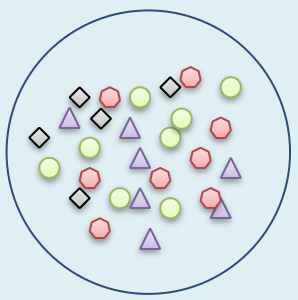
There are more than 100 trillion microbes in the human gut (approx. 2.2lbs/1kg).


Gut microbes will produce enzymes for the body to digest certain foods that the stomach and small intestine have not been able to digest and produce some vitamins that are necessary for the body. They also play an important role in the immune system and in production of serotonin, which influences mood.
  • Various types of live microbes (bacteria) that are similar to the beneficial bacteria found in the human gut
  • Help restore the balance of gut flora by improving the ratio of good to bad microbes
  • Popular probiotic foods (fermented foods): 
yogurt, miso, sauerkraut, kefir, kombucha, and kimchi. 


Friday, January 3, 2014

Product Review: Pro EM-1 Probiotic Cleanse


Since being introduced to the world in 1982, Dr. Teruo Higa’s Effective Micororganisms® (EM Technology®) has been at the forefront of the beneficial bacteria industry. These colonies of vital microbes have helped produce larger crops, condition soils, naturally clean surfaces and more. Dr. Higa’s PRO EM-1® daily probiotic cleanse makes this same technology available for your own personal, day-to-day use.

This probiotic supplement is more than just a way to enhance your diet. Each bottle is its own ecosystem and supports no less than 1 million colony forming units (cfu) per ml (cc). Six species of probiotic microfauna live in symbiosis and can be easily and safely consumed on a daily basis, reintroducing microbes to your digestive system that can aid in digestion, support weight loss, boost your immune system and promote overall, holistic health.

What makes Pro EM-1 different is that the microbes are fermented at body temperature. Unlike 99% of the other probiotics on the market, which contain freeze-dried microbes. The fermentation process is a natural process where the microbes of fed sugars (natural honey and certified organic molasses). The sugars are converted by the microbes into a variety of substances including various enzymes, co-enzymes, bio-available vitamins and organic acids and amino acids. Most companies extract these and sell them in isolated forms. Instead, in Pro EM-1 you get them all in their natural state. This natural process is also the reason that Pro EM-1 is stable at room temperatures and does not require refrigeration.

This probiotic cleanse is 100% wheat, gluten, GMO, dairy and soy free. It contains only natural ingredients: the probiotic colonies themselves and a matrix of molasses and honey that promote microbial growth. The colonies digest this molasses and honey during fermentation, making the product safe for those suffering from diabetes and other sugar-related health issues. Try a bottle out for yourself and soon you’ll make this probiotic supplement part of your regular diet with a bi-monthly delivery from Teraganix, EM’s licensed US distributor.